

The Collector’s Guide to Authentic Estate Furniture Buying
IN THIS GUIDE:
-
Why Estate Furniture Is Worth Your Attention
-
Knowing Your Periods: A Quick-Reference Primer
-
How To Spot The Real Thing
-
Condition, Patina, And What "Original" Really Means
-
Red Flags Every Buyer Should Know
-
Buying Smart: Research, Relationships, And Patience
-
Why Bucks County Is One Of America's Best Hunting Grounds
-
Ready To Start? Your First Steps
Why Estate Furniture Is Worth Your Attention
There is a reason why experienced decorators and homeowners who are ahead of the curve keep going back to estate sales and antique stores instead of going straight to a showroom. Real estate furniture has things that new furniture can't make: history, craftsmanship, and real character.
A Queen Anne highboy that has been in a local farmhouse for 250 years is a good example of its quality. The joinery was strong. The finish aged well. The proportions, which were drawn by hand before computers could help with design, have a human quality that pieces made in large quantities don't often have. You're not just getting furniture. You are buying proof of how people lived.
Beyond the romance of it, there's a practical case too. Well-chosen antique and vintage estate furniture tends to hold or appreciate in value. Unlike a flat-pack dresser that's worth less the moment it leaves the store, a signed Stickley sideboard or a documented Chippendale chair is an asset. It belongs on your balance sheet, not just in your dining room.
Knowing Your Periods: A Quick-Reference Primer
You don't need a PhD in decorative arts to buy well but you do need enough vocabulary to ask the right questions and recognize what you're looking at.
c. 1700–1760 — William & Mary / Queen Anne: Curved cabriole legs, pad feet, minimal ornamentation. Walnut was king. Look for restrained elegance and excellent proportions.
c. 1750–1790 — Chippendale: Ball-and-claw feet, carved splat backs, richly figured mahogany. Philadelphia examples are among the most prized in American furniture.
c. 1790–1830 — Federal / Hepplewhite / Sheraton: Straight tapered legs, inlay decoration, lighter forms. Reflects post-Revolutionary neoclassical taste.
c. 1820–1860 — American Empire & Victorian: Heavier, bolder, carved acanthus and paw feet. Rosewood and mahogany veneers. Dramatic but often undervalued at market.
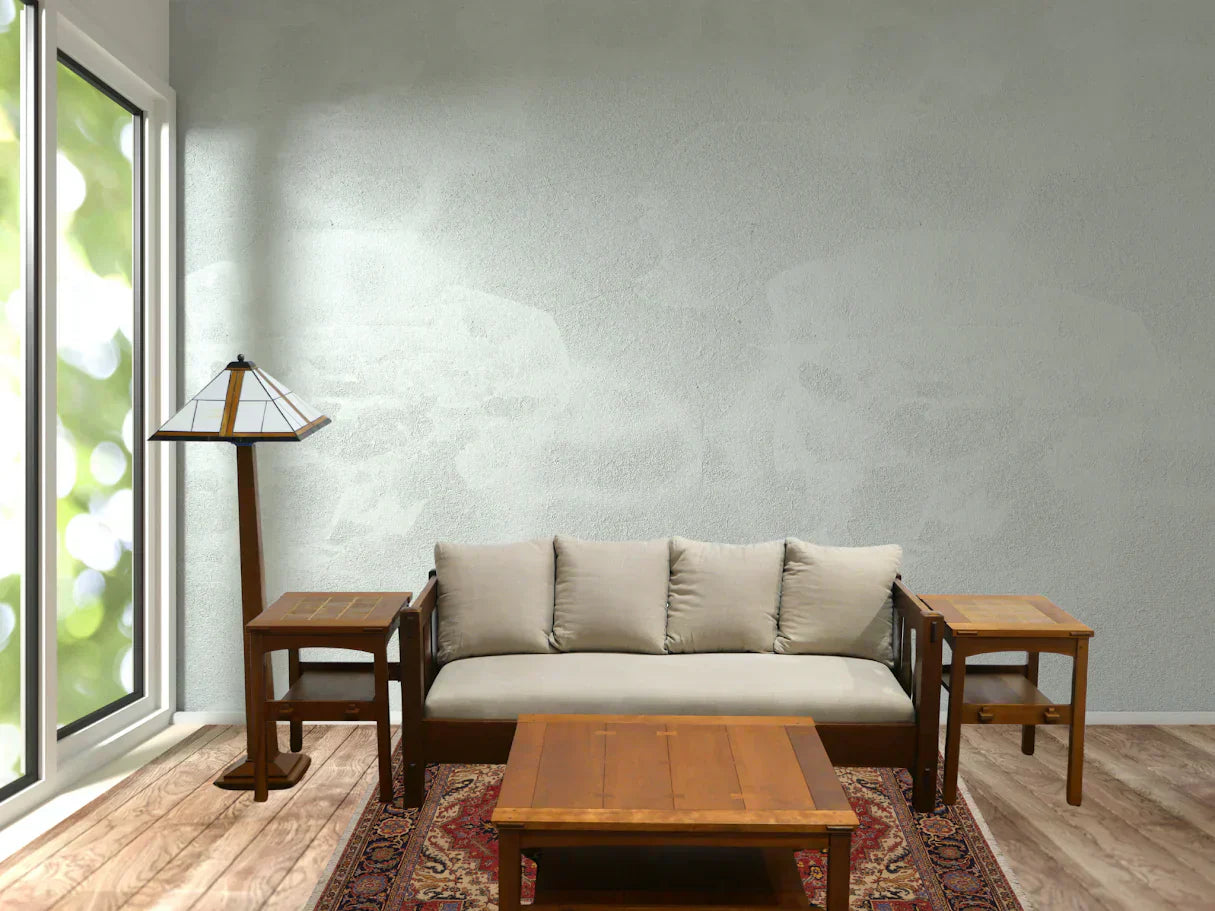
c. 1880–1920 — Arts & Crafts / Mission Rectilinear oak forms, visible joinery, leather or rush seats. Stickley, Limbert, and Roycroft are the names to know.
c. 1920–1960 — Art Deco & Mid-Century: Geometric forms, exotic veneers, innovative materials. Mid-century modern in particular has strong collector demand right now.
Understanding these periods helps you date a piece, spot inconsistencies, and ask an informed question when an expert gives you a vague "18th century" attribution.
How To Spot The Real Thing
Authenticity is the central question of antique furniture collecting, and it's not always answered by a label or a signature. Here's where to look and what to look for.
Construction Methods Tell The Story
Look for saw marks on secondary wood (the backs of drawers, the undersides of shelves). Circular saw marks didn't appear until the 1830s. Straight, slightly irregular marks suggest a hand or pit saw and a pre-industrial date. Before that, plane marks and evidence of hand-cut dovetails (slightly irregular rather than perfectly uniform) all point to authentic period work.
Secondary Woods Are Honest
The show wood, the mahogany face of a drawer front, can be replaced. But the secondary wood (drawer sides, backing boards, interior framing) is almost never faked. In authentic American pieces, you'll typically find yellow pine, white pine, poplar, tulip, or chestnut depending on the region and period.
-
Hardware Tells A Timeline: Brasses are frequently replaced, which is fine, but the holes behind the hardware shouldn't lie. Look for "ghost" marks from original hardware, staining patterns, and oxidation that matches the surrounding wood. If the hardware is original, the posts on bail pulls should be hand-forged, not perfectly round.
-
Patina Is Almost Impossible To Fake Convincingly: Genuine age patina develops in ways that are difficult to replicate. Look for color that's deeper in protected areas, the inside of a carved leg, the back corners of a drawer, and lighter on exposed surfaces. Fakers tend to distress evenly; real wear is always uneven and purposeful, concentrated where hands touched and traffic moved.
Quick Authenticity Checklist:
-
Pull out a drawer and examine the saw marks on the bottom
-
Check secondary woods: are they period-appropriate?
-
Look at hardware ghost marks behind the brasses
-
Examine patina distribution — is wear concentrated logically?
-
Check dovetails: hand-cut vs. machine-cut?
-
Smell the inside of drawers — old wood has a distinctive, unmistakable scent
-
Bring a UV flashlight to check for repairs and refinishing
Condition, Patina, And What "Original" Really Means
Many new collectors get confused by this: "original condition" and "good condition" do not mean the same thing. It's not a flaw if a 200-year-old piece shows its age in its original condition. It's a record.
A piece with its original finish, like shellac, oil, or wax, that was put on when it was new and has since aged and been polished by time is almost always worth more than the same piece that has been stripped and refinished. Even if the finish is worn or dull, it is an important part of the piece's history.
The Restoration Spectrum
There's a difference between conservation (stabilizing and cleaning without altering) and restoration (returning a piece to a prior state) and refinishing (stripping and recoating). Conservation is generally acceptable; restoration is sometimes acceptable; refinishing is almost always a value-reducing decision. Understand where any piece you're considering falls on that spectrum.
Acceptable Vs. Problematic Damage
Old shrinkage cracks in tabletops? Normal, and often charming. A missing foot replaced with a period-appropriate reproduction by a skilled craftsman? Acceptable, as long as it's disclosed. A top that's been replaced, major structural repairs with modern materials, or hidden damage that changes the piece's integrity? Worth negotiating hard on price.
Red Flags Every Buyer Should Know
This is the section to save and re-read before every significant purchase. These are the patterns that separate careful collectors from expensive cautionary tales.
Marriage Pieces
A top from one piece and a base from another joined together. Very common with secretaries and highboys. Look for mismatched secondary woods, inconsistent proportions, and non-matching tool marks.
Enhanced Pieces
A simple piece "improved" with carvings or decorative elements added later to increase perceived value. Run your hand over carved surfaces; later additions often have a slightly different finish depth or wood color underneath.
Recent Distressing
Fake aging is often too even and too dramatic. Real wear is purposeful and logical. If every edge is equally dinged and every surface equally dark, be suspicious.
Price That's Too Good
Genuine museum-quality antiques don't turn up for $200 at a random garage sale. If it seems impossibly underpriced, ask yourself what the seller knows that you don't
Pressure To Decide Quickly
Reputable dealers don't need to rush you. High-pressure tactics are a classic distraction from a piece that won't hold up to scrutiny.
Buying Smart: Research, Relationships, And Patience
Books are the best thing a new collector can buy. Price, Jobe & Kaye, Heckscher, and the Colonial Williamsburg publications are full of examples, measurements, and construction details that will help you learn faster than any number of casual browsing sessions. Before you stand in front of something with a price tag on it, find out what real examples look like.
Build Relationships With Dealers You Trust
Reputation and relationships are what the antique business is all about. A good dealer doesn't just want to sell you something once; they want to build a relationship with you that lasts for years. Look for dealers who will tell you when something is wrong, not just when it is. That honest "this isn't for you" is worth more than any number of easy sales pitches.
Your First Steps
Whether you're furnishing a historic home, building a collection, or just beginning to develop an eye, here's the practical path forward:
-
Pick A Focus: Period, style, region, or type (chairs, case pieces, tables). Collectors with a defined focus build better collections and make fewer mistakes.
-
Invest In Reference Books: Before you invest in furniture. The knowledge compounds.
-
Visit Bucks County Estate Traders: Walk through our current inventory with no pressure and no obligation. Ask questions. We love talking about furniture.
-
Attend An Estate Sale Preview: Either through us or through one of the regional auction houses. Practice examining pieces before you're buying them.
-
Ask Us About Upcoming Estates: We often know what's coming to market before it's publicly listed. Getting on our list puts you first.
-
Trust Your Eye But Verify With Your Hands: Open the drawers. Smell the wood. Turn the piece around. Good furniture reveals itself to people who take the time to look.
Collecting antique furniture is an activity that thrives on precisely the qualities which are the best to have cultivated; patience, inquisitiveness, a knack for noticing details and genuine admiration for the craft and durability. It is something we've been involved in for many years now, and we know just how surprising it can be. Contact us today!

Leave a comment
This site is protected by hCaptcha and the hCaptcha Privacy Policy and Terms of Service apply.